
Elevate Your Portfolio's Potential
Make available more financial tools in the shed. When opportunities arise, maximize your portfolio with a Dynamic Mix of Stocks, ETFs and Long-Term Options!
Stocks:
Overview
There are two main ways to make money with stocks:
1. Dividends. When companies are profitable, they can choose to distribute some of those earnings to shareholders by paying a dividend. You can either take the dividends in cash or reinvest them to purchase more shares in the company. Investors seeking predictable income may turn to stocks that pay dividends. Stocks that pay a higher-than-average dividend are called "income stocks."
2. Capital gains. Stocks are bought and sold constantly throughout each trading day, and their prices change all the time. When the price of a stock increases enough to recoup any trading fees, you can sell your shares at a profit. These profits are known as capital gains. In contrast, if you sell your stock for a lower price than you paid to buy it, you'll incur a capital loss.
In either case, your fate as an investor depends on the fortunes of the company. A company generally needs strong earnings to pay a dividend, and there needs to be investor demand for you to see capital gains.
Stock Performance
Investor demand typically reflects the prospects for the company's future performance. Strong demand—the result of many investors wanting to buy a particular stock—tends to result in an increase in a stock's share price. On the other hand, if the company isn't profitable or if investors are selling rather than buying its stock, your shares may be worth less than you paid for them.
The performance of an individual stock is also affected by what's happening in the stock market in general, which is in turn affected by the economy as a whole. For example, if interest rates go up, some investors might sell off stock and use that money to buy bonds. If many investors feel the same way, the stock market as a whole is likely to drop in value, which in turn may affect the value of the investments you hold. Other factors influence market performance, such as political uncertainty at home or abroad, energy or weather problems, or soaring corporate profits.
However—and this is an important element of investing—at a certain point, stock prices will be low enough to attract investors again. If you and others begin to buy, stock prices will tend to rise, offering the potential to make a profit—and to reverse any “paper losses” those who stayed in the market experienced during the dip. That expectation may breathe new life into the stock market as more people invest.
This cyclical pattern—specifically, the pattern of strength and weakness in the stock market overall or a majority of stocks that trade in the stock market—recurs continually, though the schedule isn't predictable.
Source: FINRA stocks overview
Mutual Funds vs. ETFs
Mutual funds and exchange-traded funds (ETFs) are two of the most common ways for Americans to invest. These investments have some important similarities but also have some key differences.
Similarities
Both mutual funds and ETFs are pooled investment funds that offer investors a stake in a diversified portfolio. Investors have many fund choices from which to gain exposure to a wide array of markets, industry sectors, regions, asset classes and investment strategies, as outlined in the fund’s prospectus.
Here are some other ways the two investment products are similar:
- Both are quite liquid. ETF shareholders can trade throughout the day, just as with stocks. Mutual fund investors can usually redeem their shares with ease on a daily basis.
- They come with risk. Both mutual funds and ETFs can lose money, and how a fund performed in the past is not an indication of how it will perform in the future.
- They have fees and expenses. Mutual funds and ETFs both charge “Annual Fund Operating Expenses,” also known as expense ratios (and expressed as a percentage). In addition, mutual funds often charge other fees, and there are generally brokerage commissions when you buy or sell and ETF. Learn more about mutual fund fees and ETF fees.
- You don’t get to choose the securities in either an ETF or mutual fund, but you can find top holdings and other information through online resources and a fund’s prospectus.
- There are active and passive versions of both fund types.
Differences
The biggest differences between mutual funds and ETFs are in how they’re priced, purchased and sold.
- Mutual funds are required by law to price their shares at NAV each business day, and they typically do so after the major U.S. exchanges close. NAV, which stands for net asset value, is the per-share value of the mutual fund’s assets minus its liabilities. In contrast, ETFs trade on a stock market like individual stocks, and prices fluctuate throughout the day. ETFs also calculate their NAV each day, but the per-share price of an ETF can deviate from the per-share NAV throughout the trading day.
- Another subtler difference: Investors purchase and redeem shares in a mutual fund directly from the mutual fund or through a brokerage firm that sells the fund. Meanwhile, ETF investors buy or sell shares of an ETF on an exchange, as they would any other publicly traded stock, allowing for what’s known as “intraday liquidity.” In short, with an ETF, pricing is continuous—you don’t have the potential price uncertainly that comes with end-of-day mutual fund pricing.
- ETFs generally give investors more control over their tax liability. An investor can choose when to sell ETF shares—basically deciding if or when a capital gains liability occurs. You’ll have to pay taxes on any realized capital gains when you do ultimately sell, however, and are also responsible for reporting any dividend and interest payments you receive. Investors can also choose when to sell mutual fund shares. But with mutual funds, a tax liability can also occur when the fund manager sells holdings with embedded capital gains.
To sum up, both mutual funds and ETFs can provide diversification, flexibility and exposure to a wide array of markets at a relatively low cost. But as is the case with any investment product, it pays to be informed and understand the differences between the two types of investment funds before you make any decision.
Source: Finra Mutual Fund Insights
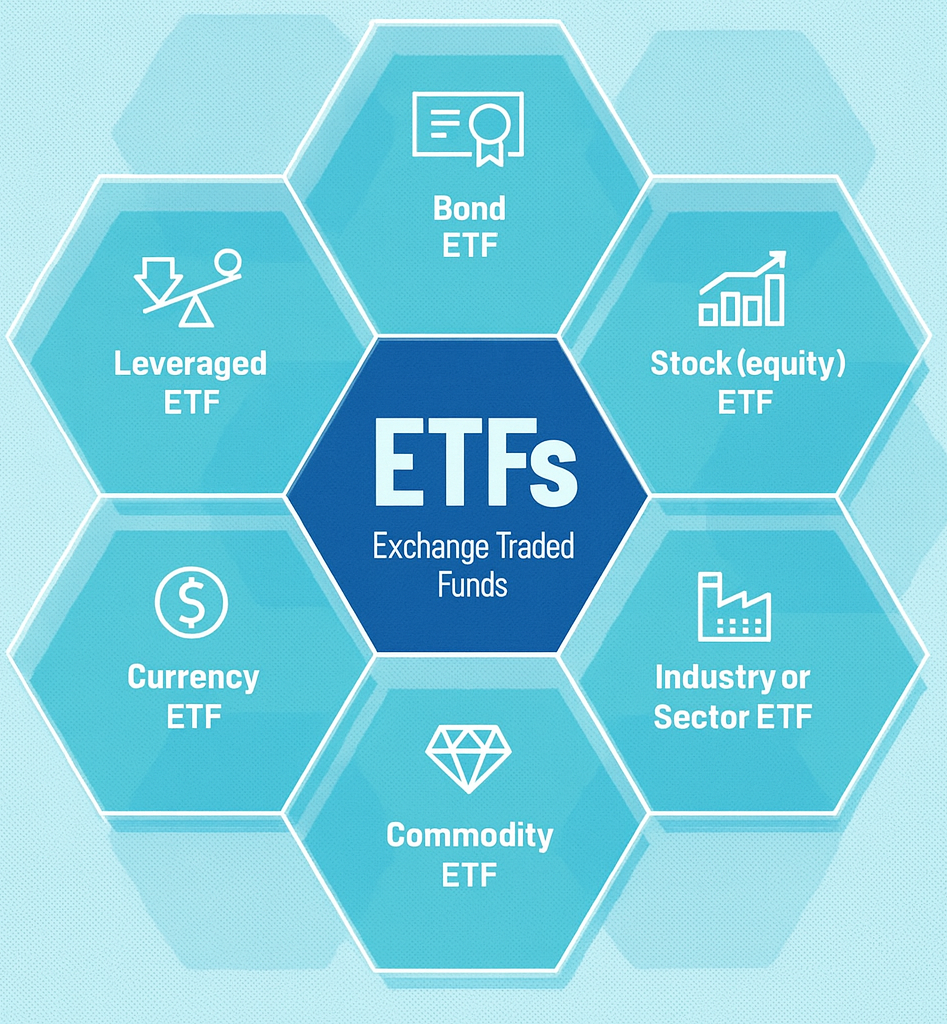


Exchange Traded Funds/ETFs
ETFs, or Exchange-Traded Funds, are a versatile and powerful tool for building a portfolio that aims for growth while maintaining flexability. They allow investors to gain exposure to a wide range of asset classes, sectors, or strategies within a single trade. This makes them a key component for those looking to create a dynamic and diversified investment approach.
Moreover, ETFs can also serve as an effective hedging tool against general market declines. By selecting specific ETFs that might counterbalance risks or offer defensive characteristics, investors can potentially protect parts of their portfolio during turbulent times. In essence, incorporating ETFs can help you create a portfolio that's both growth-oriented and resilient.
Call Options
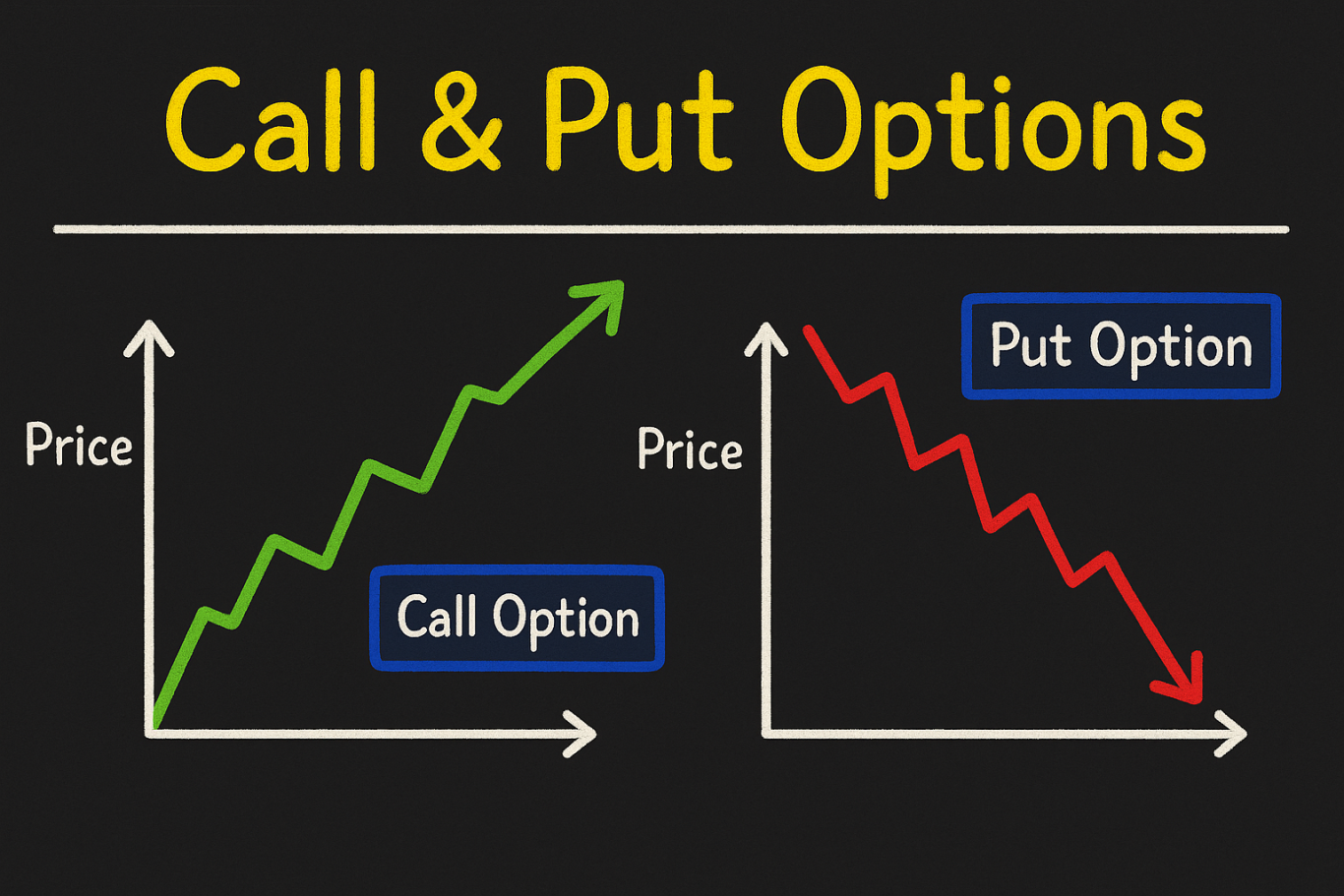
A call option is one of the two basic types of options. The owner of a call option has the right, but not the obligation, to buy 100 shares of the underlying stock at the strike price in the future.
It is helpful to know some basic terminology about the strike of a call option:
- In-The-Money (ITM): The stock price is greater than the strike price.
- At-The-Money (ATM): The stock price is equal to the strike price.
- Out-of-the-money (OTM): The stock price is less than the strike price.
Options that are out of the money will expire worthless, while options in the money will be worth some amount at expiration. However, this doesn't mean that any in-the-money option returns a profit. You must also factor in the price you paid for the option. If you paid $5 per contract and the option is ITM by $2, you would lose $3. If you are holding the option until expiration, you need for the option to be ITM by at least the amount you paid for it.
Pros:
- Buying a call is much cheaper than buying 100 shares of the underlying stock, giving you lots of leverage for relatively little capital.
- Like owning shares, a long call has no profit cap.
- You can never lose more than 100% of your investment. (This may sound like a con, but it is a benefit over other option strategies that have uncapped loss potential)
Cons:
- If the stock doesn't reach your breakeven point, you will lose your entire investment. If you owned shares instead, you may only be down a small amount, as the chance of a stock going to zero is slim. (But don't forget about Lehman Brothers)
- Being highly leveraged means that even a small downwards move can send the call plummeting, leaving you with a tough decision to cut your losses or hold out for longer
Source: OptionStrat Build Call
What can we do for you?
Lets explore the opportunities to build a portfolio with dynamic positions. By utilizing a mix of stocks, ETFS, and potentially long-term options, we can craft a portfolio that's not just robust, but also potent for growth.
Disclosure
Any information provided on this site is for informational purposes only. Securities offered through registered representatives of Colorado Financial Service Corporation, Member FINRA, SIPC. Matrix Equity Capital and Colorado Financial Service Corporation are separate entities. This site is not an offer to sell, or a solicitation of an offer to buy securities. All investments involves risk. Past performance is not indicative of future results. Any information provided on this site has been prepared from sources believed to be reliable but is not guaranteed by Matrix Equity Capital or Colorado Financial Service Corporation and is not a complete summary or statement of all available data necessary for making an investment decision. Check the background/registrations of the investment professional on https://brokercheck.finra.org.
Contact us
Telephone: 949-288-2464
Address: 26050 Acero Suite 304 Mission Viejo, CA 92691